Setting
In Project Hail Mary, the main character Dr. Ryland Grace is on a mission to save the Sun (and by extension Earth) from the star-eating Astrophage microbe. Grace then meets Rocky, an alien who is trying to save his own solar system's stars and planet Erid from the same Astrophage. This sets the stage for an amazing amaze! partnership between the 2 last survivors of their respective missions.
Comms
The "first contact" trope is a recurring theme in science fiction where humans try to communicate (or at least understand) alien language for the first time. Cracking the code for the blueprints that would take Dr. Arroway on an interstellar journey in Contact or deciphering the ink-written characters that could prevent or start a war with the alien visitors in Arrival.
Andy Weir, who wrote the books on which Project Hail Mary and The Martian are based, also had similar fun in The Martian as the main character Mark Watney, who is marooned on Mars and must find a creative way to communicate with NASA ground control.
Thumbs Up
But there is something about the communication and resulting collaboration in Project Hail Mary that hits different.
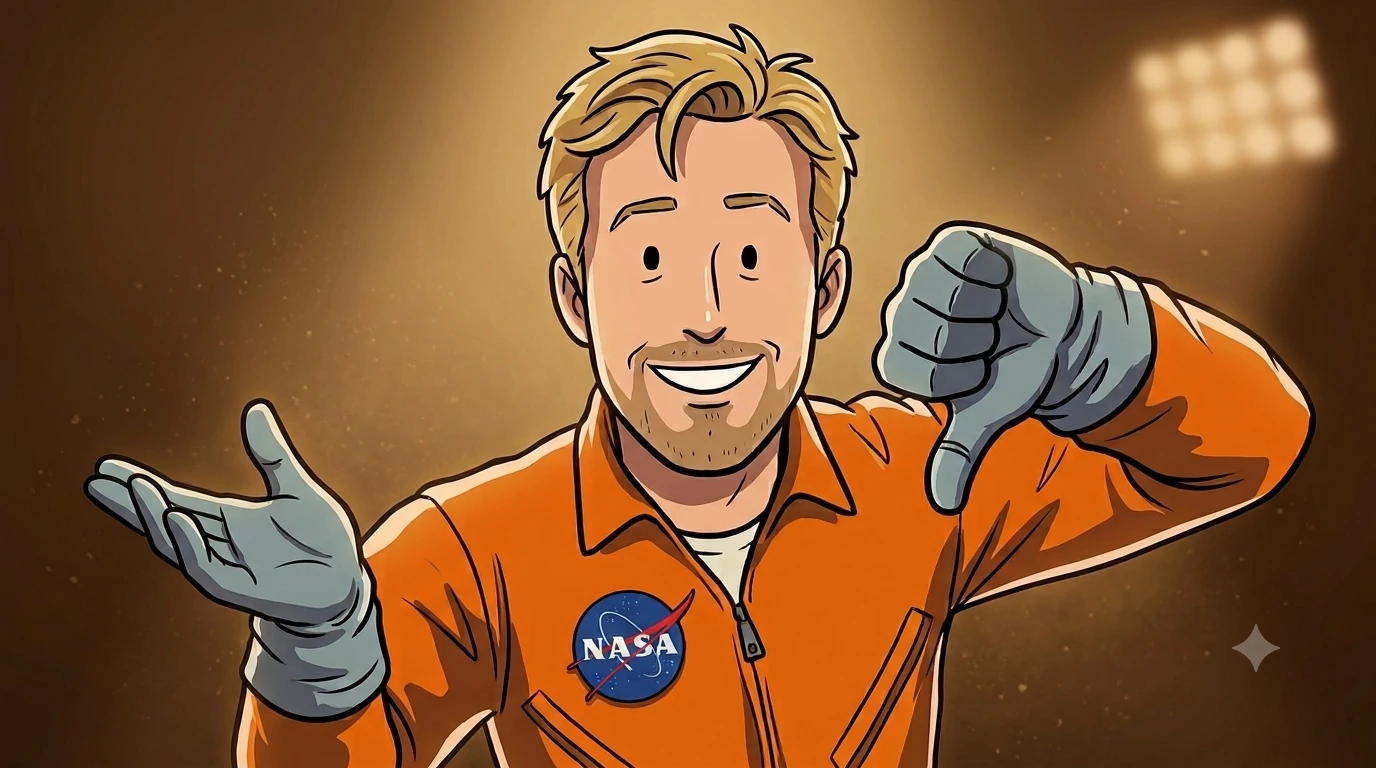
In an early part of the sequence where Grace and Rocky are trying to communicate, Grace gives Rocky a thumbs up to signal "good!". It seems that Rocky kind of gets it, but he gives a thumbs down in response instead of a thumbs up.
Grace responds with something along the lines of "Oh, well that's good enough for now".
As their ability to communicate progresses, Grace and Rocky develop the ability to share dozens of words; but whenever Grace gives Rocky a thumbs up, Rocky still responds with a thumbs down.
For a time, Grace playfully tells Rocky his thumbs down is still not quite right.
But then something wonderful happens: Rocky presents a thumbs down, and, after hesitating slightly, Grace returns the thumbs down.
Sacrificing the Correct
I'm trying to search my memories of collaborating at work, but I cannot come up with anything quite so profound. In returning the thumbs down gesture, Grace is saying "I know this is wrong, but I value this relationship so much that I'm going to consider it right from now on".
This is the equivalent of a software developer who uses tabs to indent code going "You know what, bro? I'll use spaces from now on".
Or a technical writer giving up the em dash and making do with parentheticals.
Accessibility
I think there's another way of interpreting Rocky's thumbs down gesture, though: what if Rocky can't give a thumbs up? Like, suppose his arm/hand-equivalent appendages just don't twist that way.
NOTE: I'm not trying to establish Rocky's physiological canon here. This is just a thought experiment.
This would change the meaning of Grace's return thumbs down from "Oh well, I guess the way I do it never sank in for him, but I'll do it his way from now on" to "Wait, he can't do a thumbs up, can he? I'm going to return the thumbs down gesture in solidarity".
I hate that this is the first example to come to mind, but it makes me think of this scene from Billy Madison:
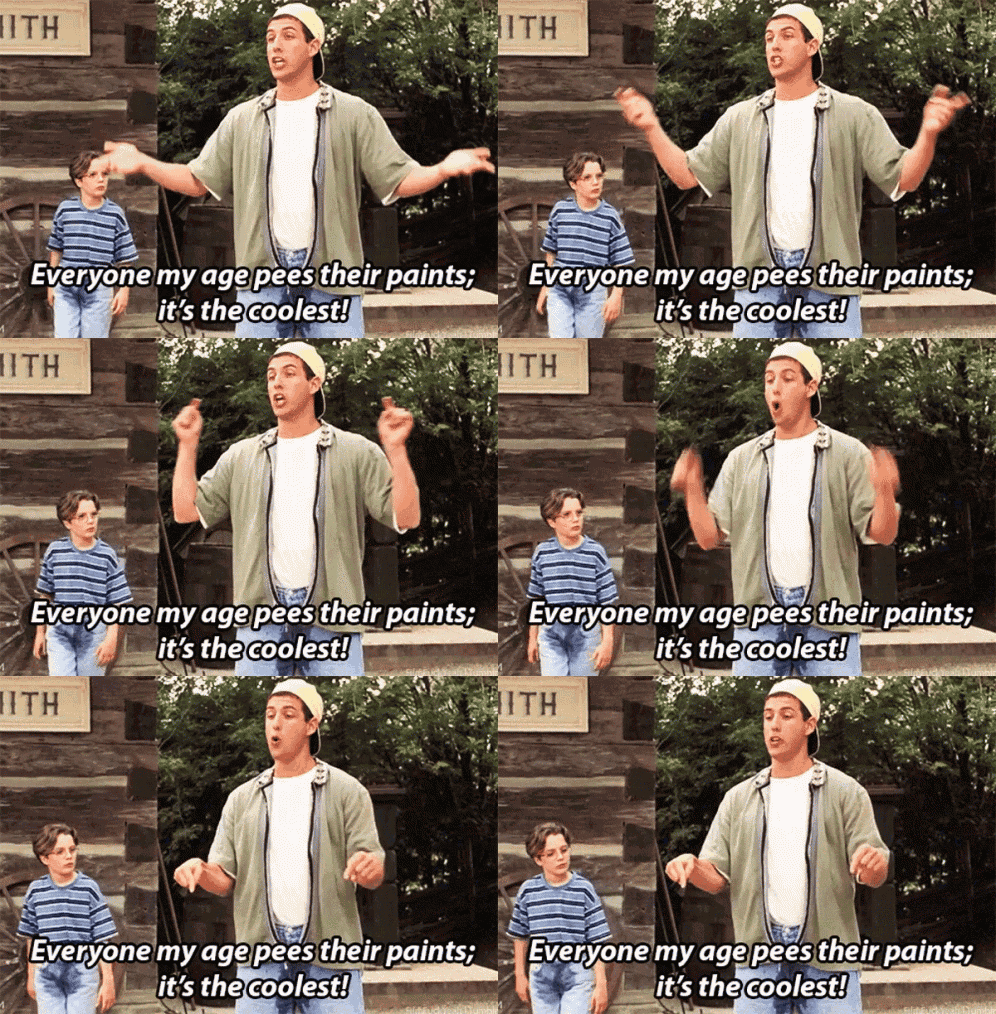
A child has peed his pants. Billy realizes that if he doesn't act quickly the kid is going to be bullied ruthlessly. So he splashes water on his pants and declares that "Peeing your pants is cool!" for all to see. Billy used his clout to save a child from [potentially years of] torment.
Inclusion
OK, the act of pretending to pee your pants to rescue someone is not super generalizable 😹 But the sentiment is.
I think you could boil it down to "I see you have a disability—or perhaps you're just different in this way—so how can I act in a manner that prevents additional suffering for you?"
There are so many ways to act on this, but here are a few arbitrary examples:
- Suppose you work on site with someone that walks with a cane. DO invite them to lunch but maybe go to a different restaurant than a place that has stairs and no elevator.
- One of your teammates has talked about how they are prone to migraines, and they are showing signs that they are having one right now. Maybe pull down the shades in the meeting room and/or switch to dark mode (if possible) for the demo you are presenting via a browser.
- A coworker joins a recurring team video call and occasionally they will act agitated or even manic. Instead of asking them if they are drunk or telling them to calm down, be respectful with the knowledge that they are likely in a temporary state.
Conclusion
I think the central tenet that underpins all of these strategies for accommodating accessibility is to "meet people where they are". To be fair, it's unrealistic to expect everyone to recognize when someone would benefit from special treatment. We should still try, though!
But even more broadly, collaborating with other humans is always going to work better if each participant is willing to make sacrifices.
Going back to Project Hail Mary, we saw Rocky build a [D20?] enclosure just so he could work with Grace on his ship. And both Rocky and Grace risked their lives to save each other.
So it's almost like Andy Weir is asking each of us: "What are you willing to give up in the name of progress?"